Knightsbridge House Clearance: Recycling and Sustainability Commitment
 At Knightsbridge House Clearance we place sustainability and eco-friendly waste disposal area practices at the heart of every clear-out. Our house clearance Knightsbridge service is designed to minimise landfill, maximise reuse and support a circular economy across Kensington & Chelsea, Westminster and neighbouring boroughs. We work to turn what would be waste into value via careful sorting, targeted reuse and responsible recycling for domestic and commercial clearances.
We operate with a clear recycling percentage target: an ambitious 90% recycling and reuse rate for all clearances. This target covers items that are refurbished, donated, sold for reuse or sent to authorised recycling streams. It is a practical, measurable goal that guides decisions on-site, from manual sorting to destination tracking.
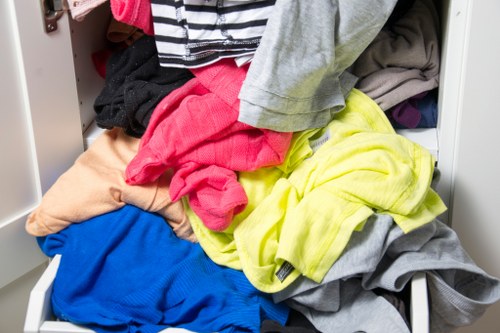 Our approach mirrors local boroughs' waste separation principles — where residents are encouraged to separate glass, paper and card, mixed recycling, food waste and residual rubbish — and we adapt our clearance procedure to match those systems. This helps ensure collected materials are compatible with local processing and transfer stations.
How we manage materials and local transfer stations
We segregate items into dedicated streams on every job: reusable furniture and appliances, textiles, books and media, electronics, metals, wood, inert rubble and general recyclables. When on-site sorting is complete we route materials to the most appropriate local facilities — civic amenity sites and transfer stations serving central London boroughs — to reduce transport time and handling. We prioritise borough household waste recycling centres and licensed transfer stations that accept separated loads and high-quality materials for processing.
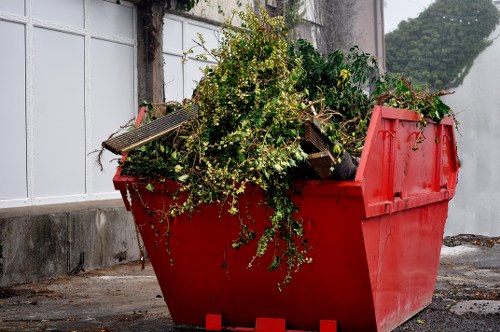 Our logistics planning includes mapping drop-off points across Westminster, Kensington & Chelsea and adjacent boroughs so that glass, plastics, paper, WEEE (electricals) and metal fractions go to the best available local transfer station. This reduces cross-city movements and helps keep our carbon footprint low while maintaining compliance with local sorting rules.
Working with local civic amenity sites means less contamination and better recovery rates. To support borough waste separation schemes we supply clear on-site guidance and use colour-coded bags and containers aligned to local expectations.
Charity partnerships, reuse networks and sustainability goals
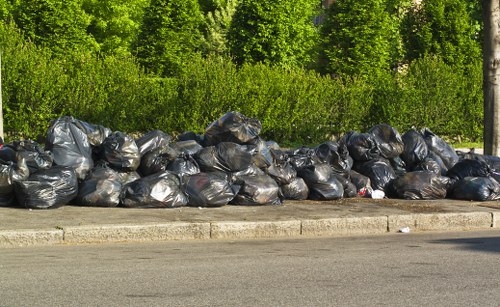 A core part of our sustainable rubbish area policy is partnership: we have formal relationships with several reputable charities and community reuse centres to ensure serviceable items find a second life. Typical partners include local shelters, furniture reuse charities and national non-profits that run shops and refurbishment programmes. Where items can be salvaged or repaired they are channelled to:
- Local charities and community centres accepting furniture and household goods
- Textile reuse schemes and clothing banks
- Electronic and appliance refurbishment networks
Donations are processed to meet partner acceptance criteria, and anything unsuitable for reuse is sent for material recycling. This structured reuse-first approach is central to our sustainable clearance philosophy and helps us reach our recycling and reuse targets.
Low-carbon vans and transport choices
To complement careful sorting and local dispatch, our fleet is built around low-emission vehicles. We deploy a mix of electric vans for central London short runs and Euro 6 compliant low-emission vans for heavier loads and longer trips. Using low-carbon vans reduces emissions within the boroughs and keeps access to low-emission zones simple and compliant.
Route planning software optimises journeys to transfer stations and charity drop-offs, cutting mileage and idling time. The combination of an efficient fleet and local transfer use helps lower the carbon intensity of a typical Knightsbridge clearance compared with long-haul disposal models.
We also monitor fuel and charge usage and maintain a rolling programme to expand electric vehicle deployment as charging infrastructure improves across central London.
What we recycle and how we measure success
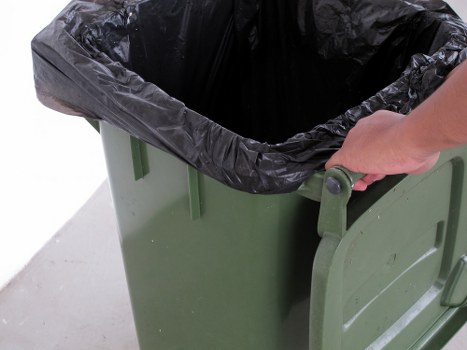 Our sustainable rubbish area operations include recycling and reuse of:
- Furniture and fittings (refurbishment or donation)
- White goods and WEEE (repaired or recycled through authorised WEEE facilities)
- Paper, card, mixed plastics, glass and metals (sorted to match borough collection streams)
- Textiles and soft furnishings (reused or processed via textile recyclers)
- Construction waste and inert materials (sent to licensed aggregates or recovery plants)
Success is tracked through job-level reporting: each clearance generates a diversion record detailing the percentages reused, recycled or sent to energy recovery and landfill. These records support our internal goal of a 90% recycling and reuse target and are used to refine on-site sorting, partner selection and transport logistics.
Community and borough alignment
We actively align with borough policies: in areas where councils require explicit separation for glass, food and mixed recycling, our teams follow those rules when preparing loads for transfer stations. This alignment reduces contamination, improves acceptance rates at recycling facilities and strengthens community waste management.
By combining a reuse-first policy, focused charity partnerships and low-emission transport, Knightsbridge clearance services deliver a practical, measurable contribution to a greener central London. Our strong commitment to the local recycling ecosystem ensures that clearances are not just convenient, but responsible.
Whether you request a single-item uplift or a full property clearance, our sustainability standards are applied consistently: aiming for the highest possible reuse, carefully using local transfer stations and charities, and keeping our fleet as low-carbon as feasible to support a cleaner, more circular Knightsbridge.